Free virtual event: hear from influencer leaders at ŌURA, Adobe, Stanley 1913 & more.
Vedi i relatori




Affiliate links and codes are present in nearly a third of all brand collaborations.
However, affiliate commissions, by themselves, are often not enough to get a creator to even get out of bed.
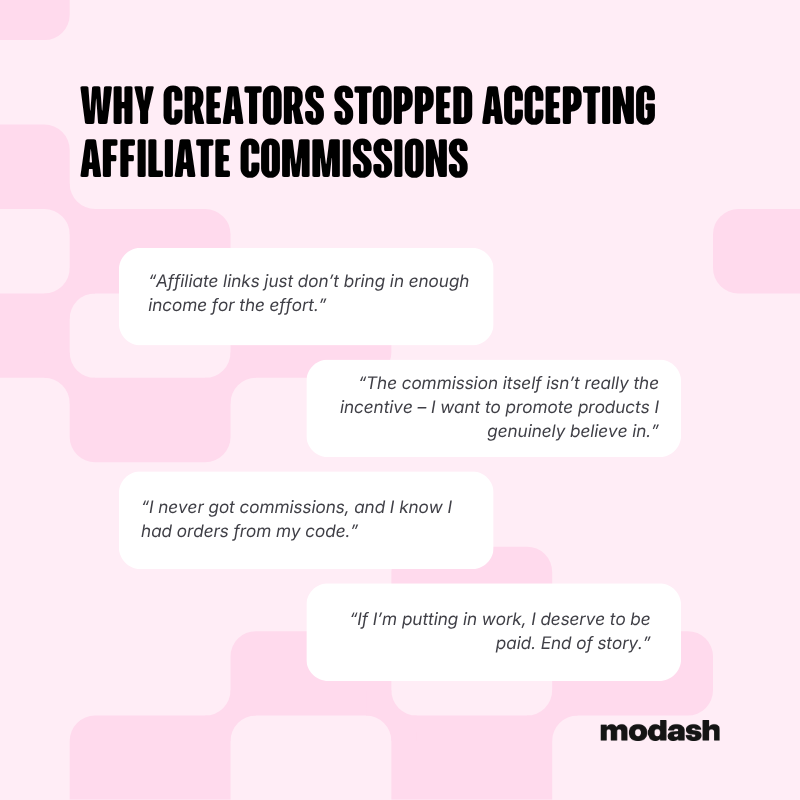
Creators have cooled off on affiliate collabs – and they’re not shy about why:
And while 68% of creators we polled said they still do accept affiliate commissions – they accept them with caveats.
We spoke to 57 creators and 70 influencer marketers on their affiliate programs, what they do and don’t do, and what they really want out of affiliate collabs.
The reality is that there’s a gap between the affiliate programs where marketers make it a priority, and the ones that let it run on autopilot. Creators are looking for real partnerships – and an affiliate code in their LinkTree just isn’t going to cut it.
In general, affiliate work doesn’t really get creators excited.
And who can blame them? The economy is in shambles, and working for MaybePay just isn’t as feasible as it used to be.
And it never really was feasible to begin with.
Of the creators we polled, 68% said they still accept affiliate commissions – either as the total payment for collabs, or partial.
The main reasons the other third said they’d stopped affiliate collabs? The commissions just weren’t it.
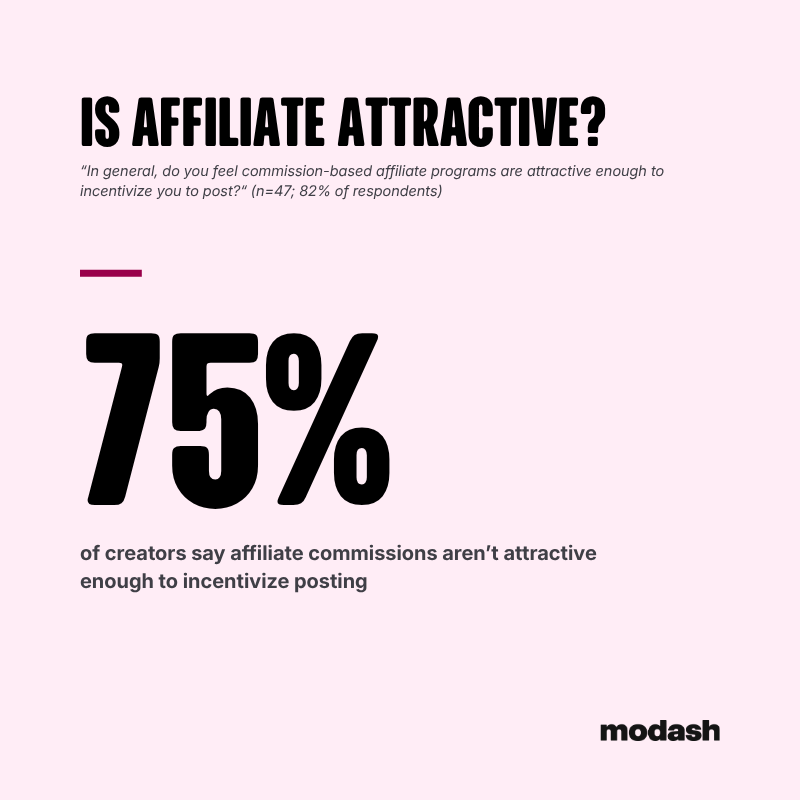
In fact, even among those who do accept affiliate said the commissions weren’t attractive enough to incentivize them to actually post content.
And the other problem – there’s nothing to work towards. Nearly 6 in 10 marketers we polled said they have a single-tier affiliate program.
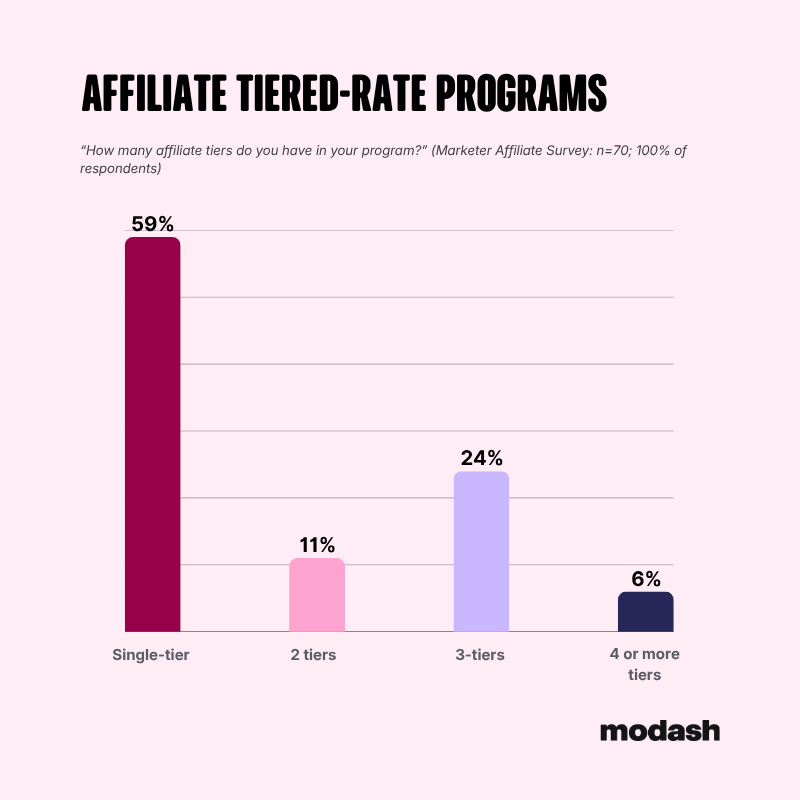
So if the initial tier isn’t super competitive… that’s kinda it.
That said – affiliate is a much easier sell when it’s a commission bonus on top of a flat fee. Both marketers and creators agreed on that much:
But by itself? Marketers have to do more to make affiliate worth it for a lot of creators.
Cosmetics, fashion, food and beverage items – these are things that should be regularly refreshed for your affiliates.
Mainly because it doesn’t make sense for an affiliate to keep promoting summer clothing in November, or an empty jar of face cream. They can’t exactly build trust through repeated promotion if they don’t have any more of the product.
From our survey earlier this year, 9 out of 10 marketers said they gift free product to their affiliates.
Regifting was a different story: a third of marketers regifted new products only before new launches or campaigns. Another 15% said they gifted product only on recruitment – after that, the creator was on their own.
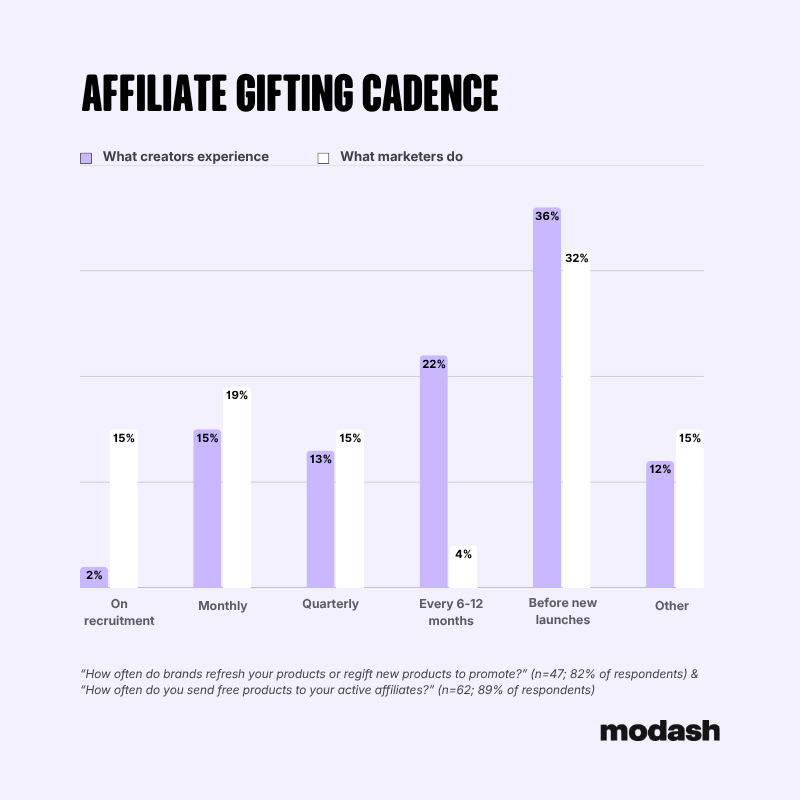
The problem with gifting only on launches/campaigns is that your affiliate is sitting on their hands in the meantime. Unless you’re launching new products or campaigns all the time – chances are, you’re giving an affiliate the perfect opportunity to become inactive.
In reality, the time between campaigns and launches is the perfect time for your affiliates to be building brand awareness, pulling new people into your orbit, and keeping their audiences warm for you.
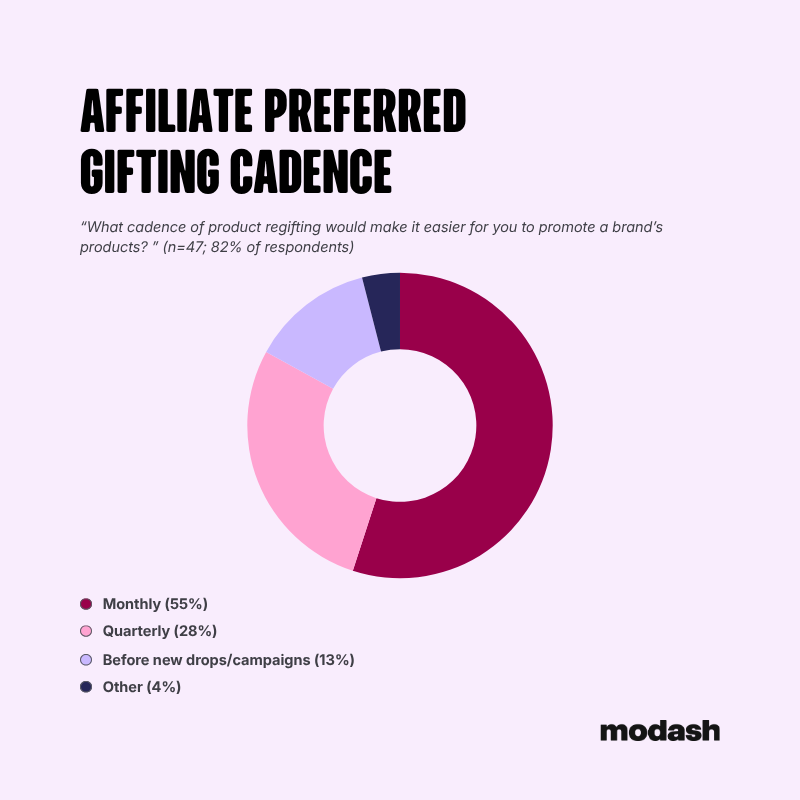
Creators agree – 72% said brands don’t regift enough for them to promote their products effectively. The ideal cadence? Monthly.
When we surveyed marketers earlier this year, we wrote about the Affiliate Effort Gap. The Effort Gap is the difference in results between marketers who take a hands-on approach vs. those who let the affiliate program run on it’s own.
And it’s not an indictment of those who can’t put more into an affiliate program. We know influencer marketers fall into a catch-all role where they’re often doing it all (and then some).
That doesn’t change the fact that affiliate generally does better when there’s a more hands-on person running it.
Nearly 7 in 10 marketers said they were either somewhat or very involved in managing their affiliate programs. The other third who weren’t (or couldn’t be) as hands-on had significantly lower:
We asked creators the same questions: in your experience, are marketers more involved or more hands-off, and what would you prefer?
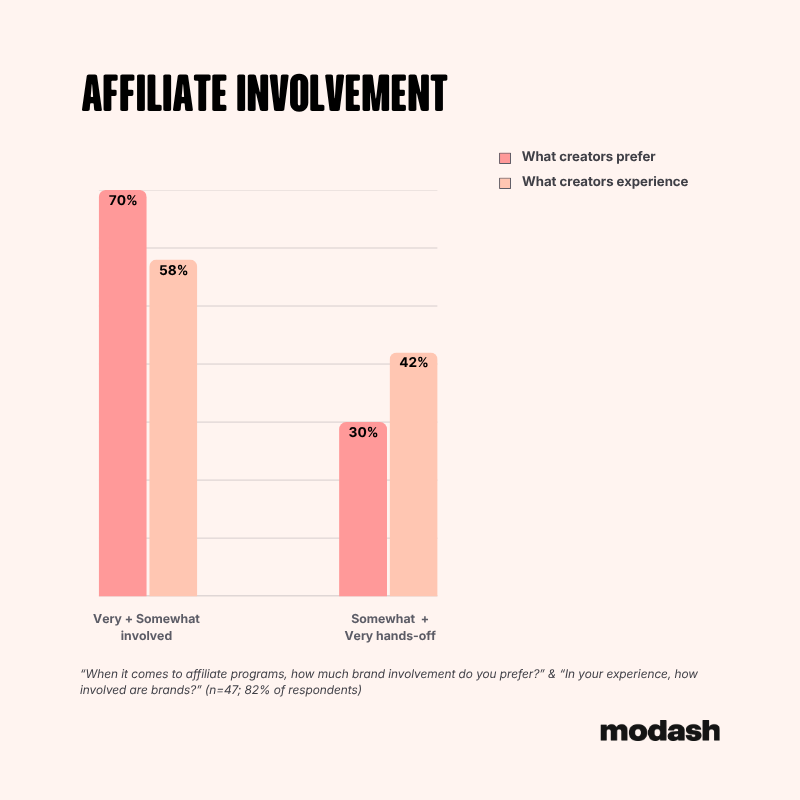
70% of creators want marketers to be on the more involved side of the coin. What they actually get shifts a little further to the less-involved side.
In fact, several creators said they’d be more active if brands put more into the relationship.
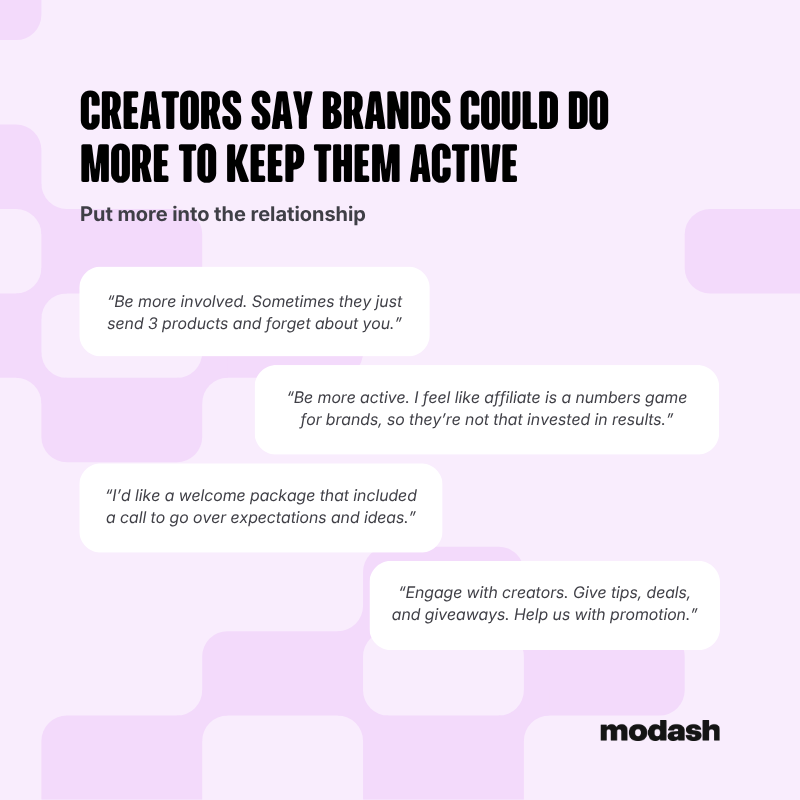
And this isn’t a big unknown for marketers. Melissa Sorby confirms this exact connection between brand involvement and affiliate activity.
As the program grows, affiliates need onboarding, regular communication, performance reviews, and relationship management. If those things start slipping, top performers can feel undervalued and become less engaged.
The Effort Gap doesn’t just affect brands – and this survey showed us how creators get affected by it too.
They end up turning off on affiliate altogether:
Affiliate programs are too important to be a side thing you throw together to earn some extra sales.
When you treat it like a brand ambassador program instead, you end up with something a lot more powerful that earns you constant revenue.
Affiliate by itself is a hard sell for creators who get paid per deliverable – so use your affiliate program to stoke real brand loyalty by making it irresistible.
It’ll be worth it for both you and your creators.
I nostri autori esperti