Free virtual event: hear from influencer leaders at ŌURA, Adobe, Stanley 1913 & more.
See the lineup




Imagine you’ve just opened Instagram to find "a few creators" for this quarter’s campaign, hoping it’ll take an hour, tops.
And yet, three hours later, you've got 14 tabs open, a spreadsheet with roughly six names in it, and a sneaking suspicion that two of them bought their followers.
Don't worry, it's not just you.
When we asked 56 influencer marketers about their search process, over 87% said finding the right-fit creator is getting harder. And most of them said the same thing: they keep turning up creators with rubbish engagement, the wrong audience, or a profile that just feels a bit… spammy.
So what's going wrong?
Well, I don't think it's where people are looking that’s the problem. It's that finding influencers is actually two jobs:
What usually happens is we pick one way of casting (hashtags, I'm looking at you), then choose our favorites based on vibes.
So in this guide, I'm going to show you eight ways to cast your net, then how to qualify whatever you catch on whatever platforms you’re using.
Let's get into it 👇
Quick disclaimer before we dive in: there's no single "best" way to find influencers. Sorry.
The marketers in our survey don't stick to one method. They mix and match depending on the campaign, the budget, and how much time they've got. You'll probably end up doing the same.
Here's the cheat sheet for all eight:
Pick your favourites, or try them all. Here’s how each one works 👇
Best for you if: you're recruiting 10+ creators a month, or you're tired of asking for audience screenshots.
A database lets you skip the scrolling and go straight to qualifying.
Instead of eyeballing profiles one by one, you set filters for the things that matter (audience, engagement, niche) and only see creators who meet them. With Modash, for example, you can stack things like:
And it has every creator on the planet with 1k+ followers across Instagram, TikTok, and YouTube. That’s 380M+ profiles 🤯
Say you’re looking for female creators between the ages of 25–45 whose audience is based in the US or UK, who mention "running" in their bio. You can apply all of these filters on Modash and get a list of influencers who meet your criteria in an instant.
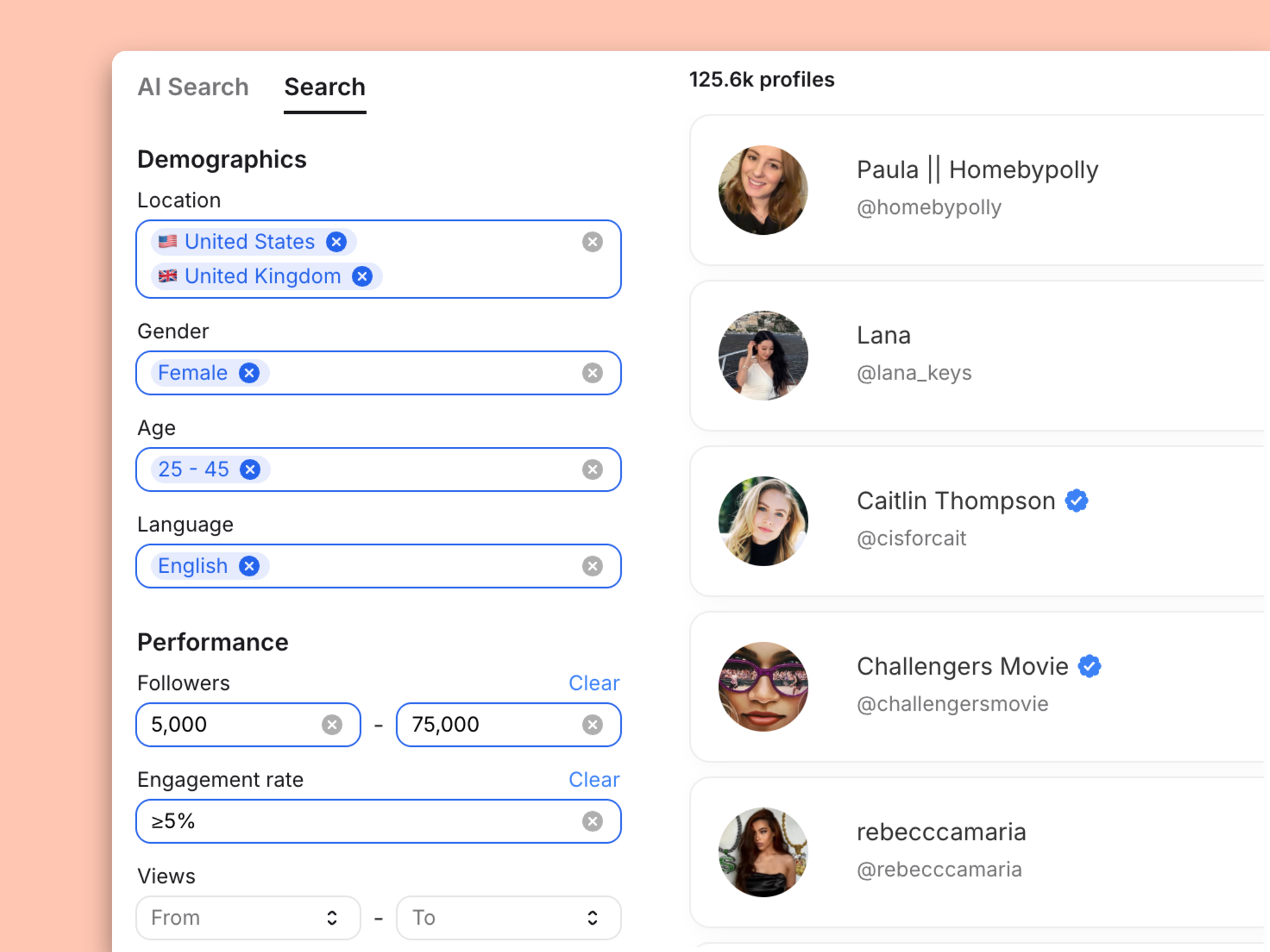
🤓 Pro tip: don’t go filter-crazy straight away. Start with two or three basics, like location and follower range, and see what comes back. Then add more as you go.
One thing to know before you sign up for any tool, though: not all databases are built the same.
Some are opt-in, meaning creators have to sign up to be listed. Sounds fine, until you realize you keep seeing the same faces in every search. And so do your competitors. Open databases list everybody, so you've got a far better shot at finding someone the rest of your category hasn't spotted yet.
The catch: using a database costs money, and filters only work if you know what you're looking for.
Best for you if: you only need a handful of creators and you have a tight budget so can’t purchase a tool for discovery yet.
Ah, the old faithful.
If you've ever typed #skincare into Instagram and started scrolling, congrats, you've used this method. And you're far from alone: just over 66% of the marketers we surveyed lean on hashtags or keywords when they're searching on social media.
It's not all about slapping your niche into the search bar, mind.
The marketers we spoke to use five different types:

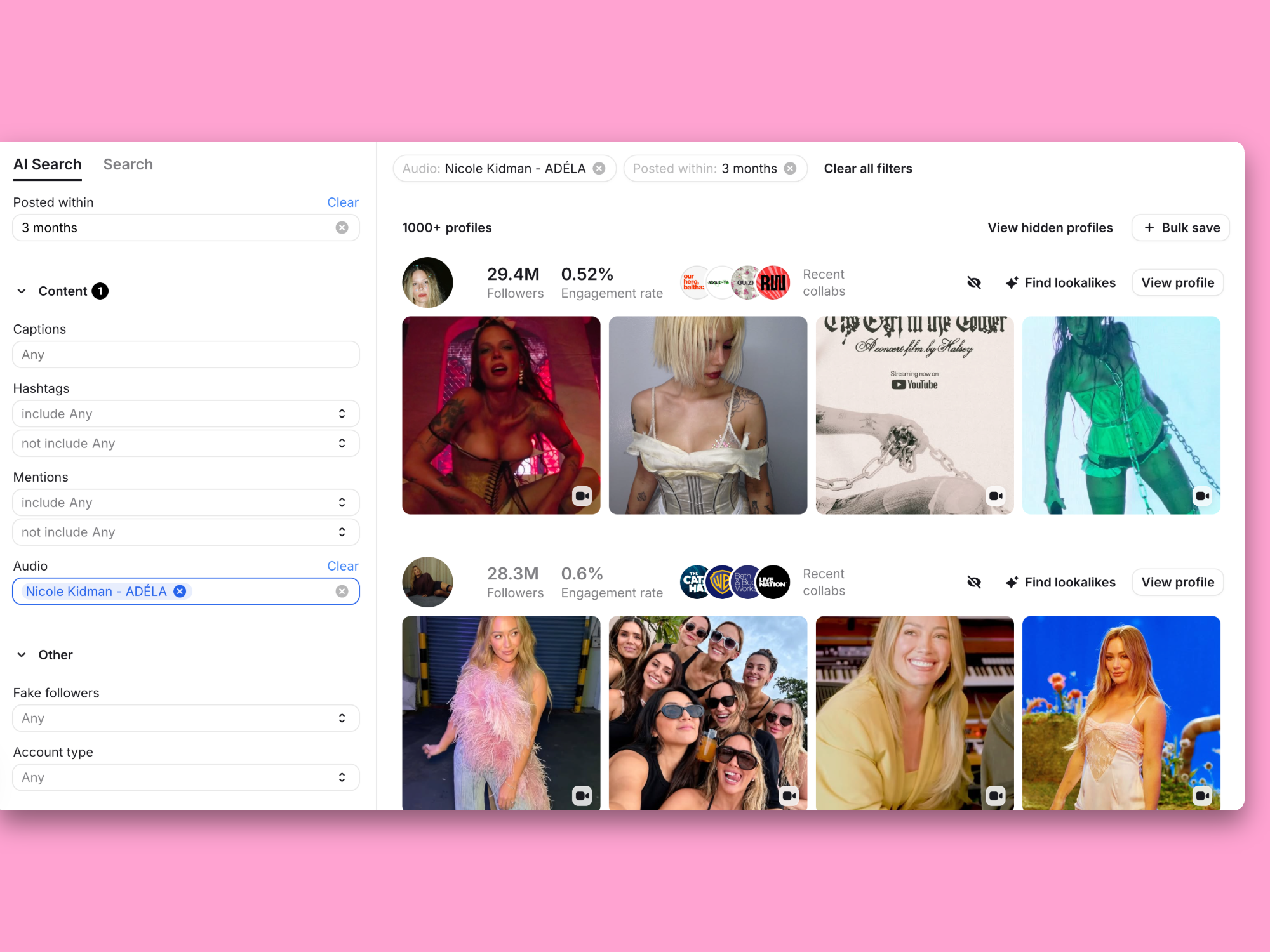
You can also search for keywords or hunt for creators using trending sounds that you’d want to use for your brand content. Lee Drysdale, Senior Influencer and Affiliates Executive, starts his search there:
I always look on TikTok first – there's some super cool talent under the trending keywords and sounds.
If you’re using Modash, our audio filter helps you find creators using whatever sound(s) you want.
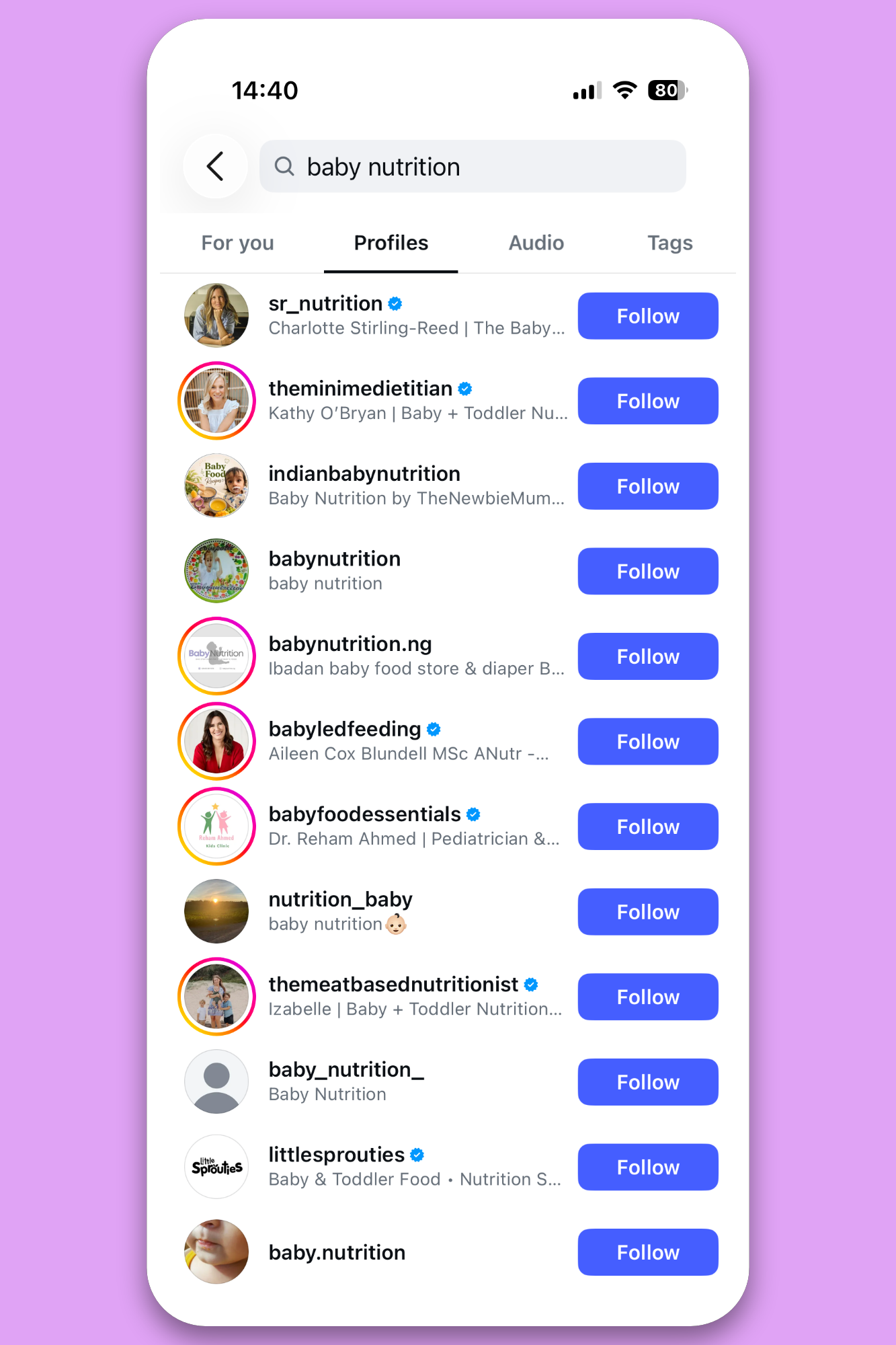
🤓 Pro tip: on Instagram, you can also search for the “Profiles” tab for keywords. Lots of creators pop their niche in their name field, so a search for "baby nutrition" will surface people who've literally labeled themselves for you.
So far, so good. But there's a reason this method is rarely used in a silo.
For one, it's noisy.
You're seeing whatever the algorithm fancies showing you, which isn't the same as who's best for your brand.
You also can't see anyone's audience data, so that creator with the gorgeous feed might have followers who are nothing like your customers. And once you do find someone, the vetting and outreach all happen somewhere else. Cue the spreadsheet.
It adds up. Over 44% of marketers told us they spend too much time finding creators, and I'd bet good money a lot of those hours went on hashtag scrolling 😬
Best for you if: you're getting to know a new niche and want inspiration before you build a proper list.
Good news: scrolling Instagram Explore, TikTok's For You page, and YouTube search technically counts as work. You're welcome.
And it's useful, too. A bit of time in the feeds is one of the best ways to get a feel for a niche:
All for the grand total of $0.
The problem is that the algorithm picks who you see, and it's basing that on your viewing habits, not your customer's. So if you've spent the week watching air fryer recipes and dogs falling off sofas, your For You page isn't gonna be much help finding skincare creators 🐶
That also means the hidden gems stay hidden. You'll mostly see creators who are already doing well, which is who everyone else is seeing too.
And even when you find someone great, you've got no clue about their audience. The only way to find out is to DM them for audience screenshots, then wait. And wait.
🤓 Note that each feed has its own quirks. If you’re focusing on one platform, we’ve broken down how to find Instagram influencers, TikTok influencers, and YouTube influencers.
Best for you if: you’re looking for a specific vibe or aesthetic.
Google "fitness influencers" and you'll get a list of celebrities you can't afford. Thanks, Google.
The trick is to get specific: niche + platform + location.
Searching for a phrase like "List 15 micro fitness influencers on Instagram who post workouts, form breakdowns and gear reviews, based in the US" will get you somewhere. ChatGPT and friends respond to the same trick, and they're decent for a quick starter list.
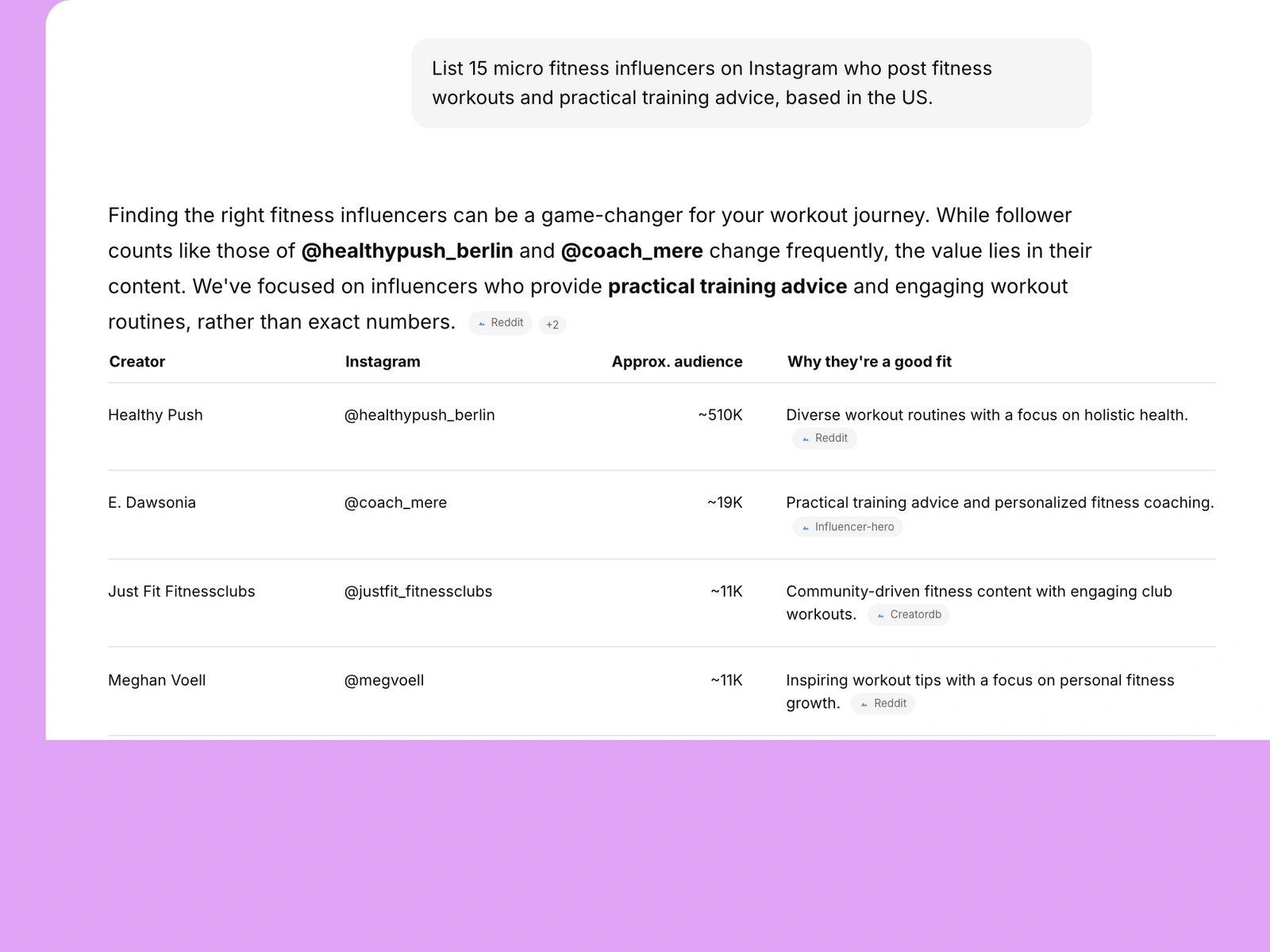
The downsides? It's manual, the results skew toward creators who are already pretty popular, and LLMs will occasionally invent a handle with total confidence 🙃
Not to mention: LLMs will not check if a creator’s audience matches your ICP.
A purpose-built option – like Modash’s AI creator search – works better here. The tool lets you describe the creator you’re after in plain English, and it’ll pull up a list of creators who match that vibe. Try something like “woman building a cabin in the woods” (a real search, by the way) and you’ll get creators who actually post that kind of content, not just ones who mention it in their bio.
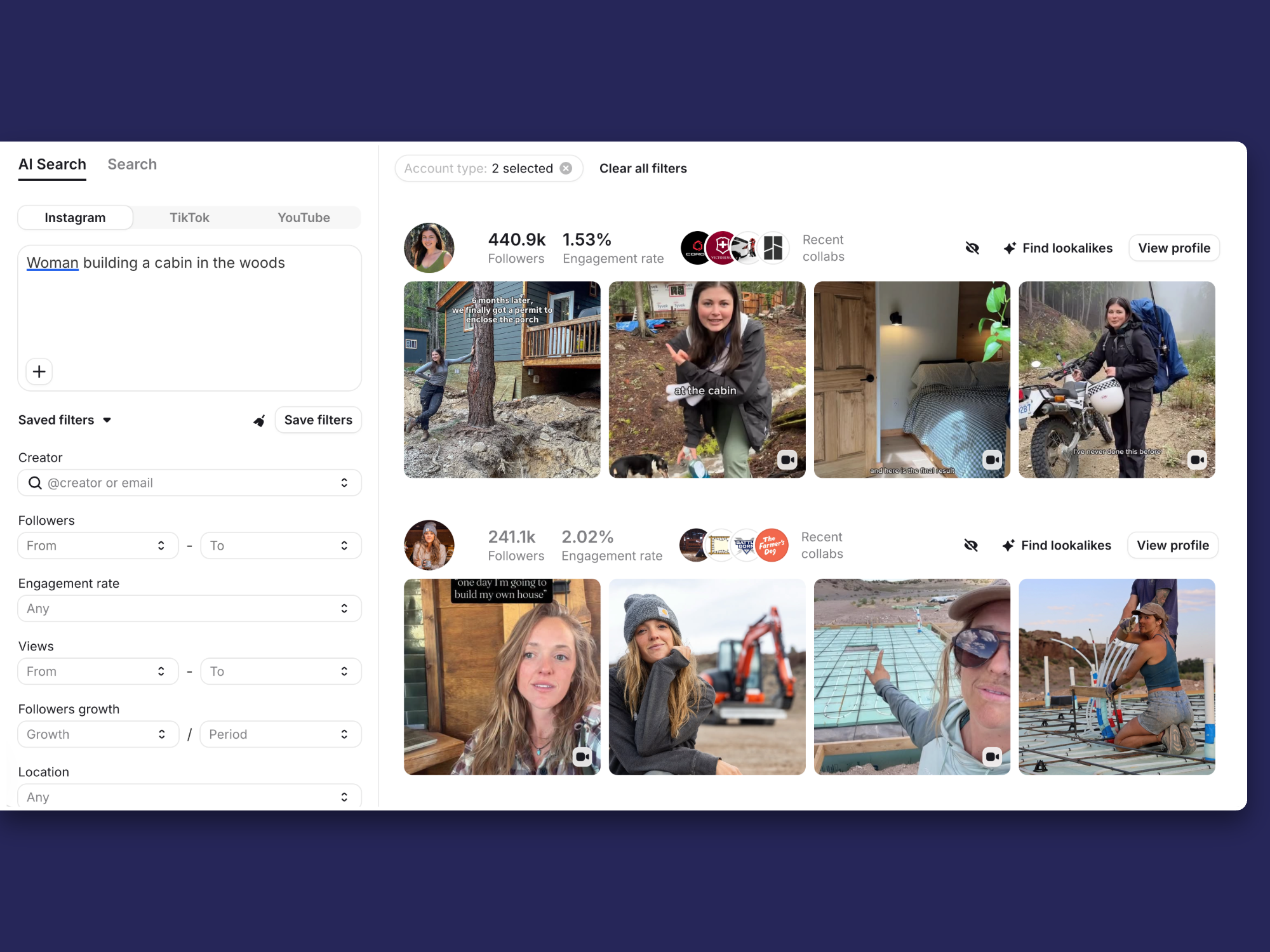
You can also upload an image to find creators with a matching aesthetic, or paste a handle to pivot into similar profiles.
🤓 More in our roundup of AI influencer discovery tools.
Best for you if: you've got at least one proven partner and want more of the same without rolling the dice.
You know that one creator who absolutely smashed it? The one whose code got used so many times you checked the dashboard multiple times to make sure it wasn't broken??
Yeah, you want 20 more of them.
So rather than starting from a blank page every time, use your best performers as the template.
Here's how to do it by hand on each platform:
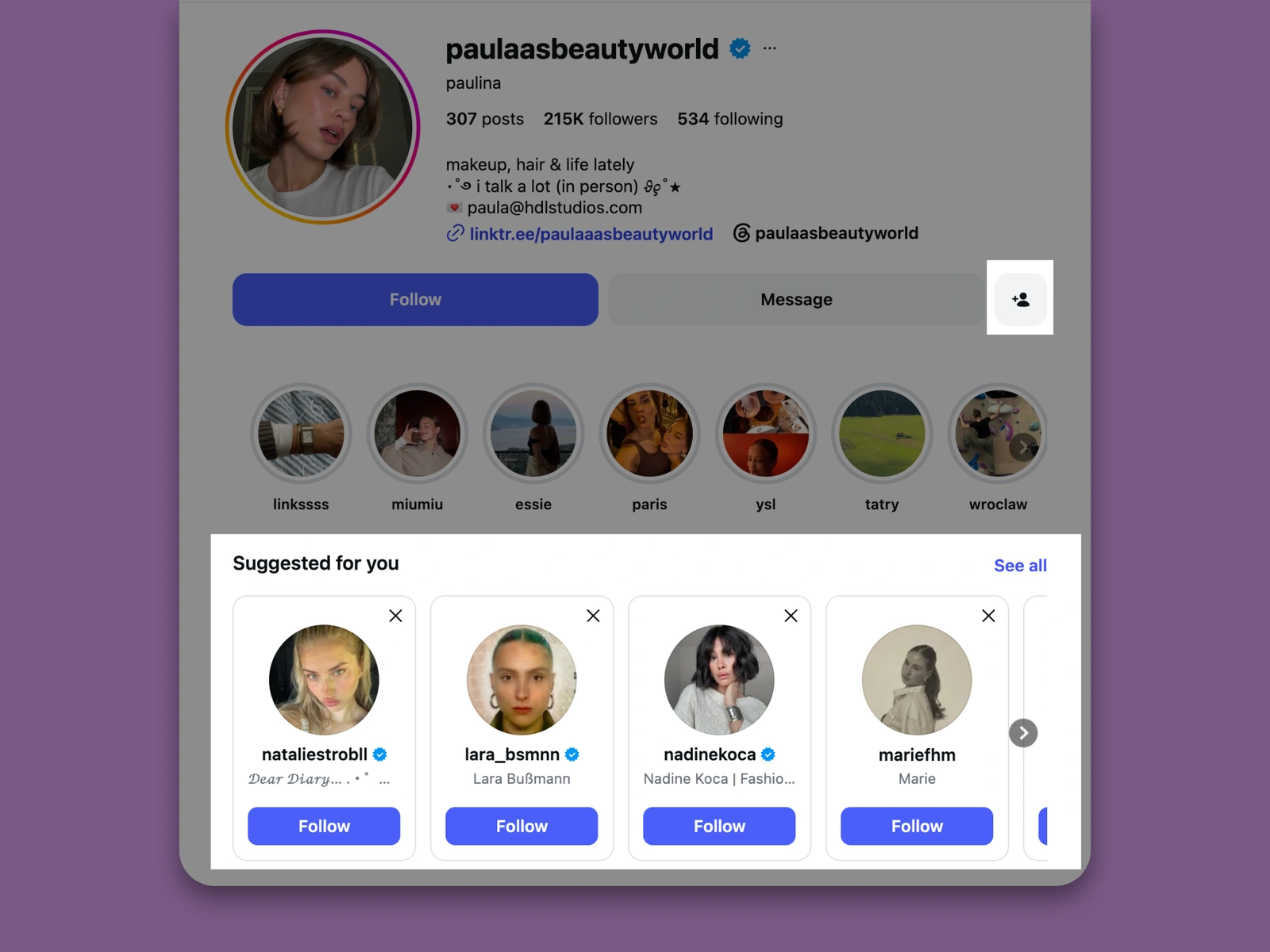
It's a decent starting point, and it's free.
The problem is that "similar" means whatever the platform decides it means. You might get creators who look alike, but have totally different audiences.
This is where Modash's lookalike search can really help. Give it one creator and it'll find others with similar content or similar audiences (your call). Then you can layer filters on top, like location or engagement rate, to tighten things up even more.
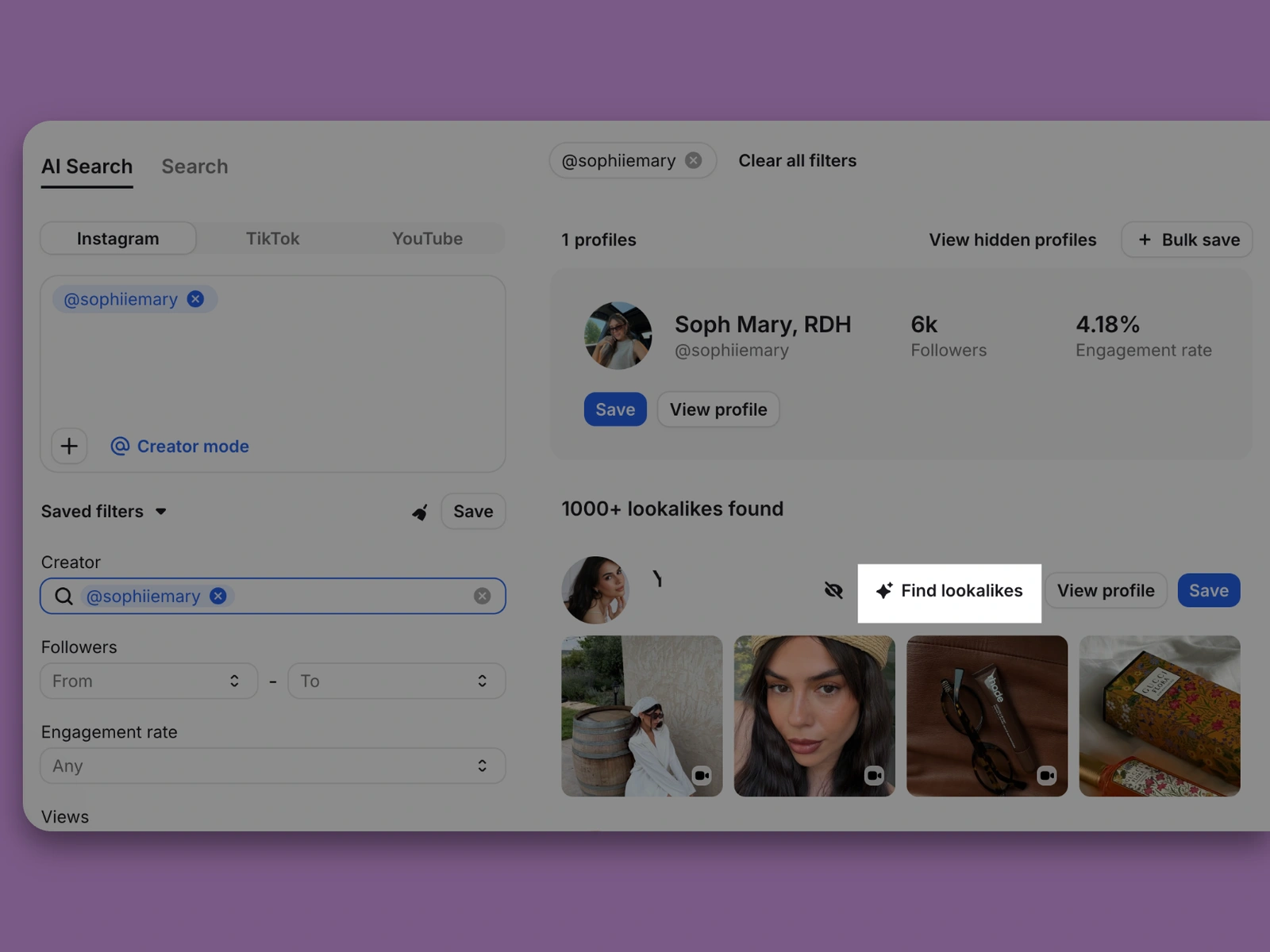
One great partner in, a whole shortlist out. Lovely stuff 👌
🤓 Get a mini preview of this in action with our influencer lookalike tool.
Best for you if: you've got an existing following or customer base. Which, let's face it, is most of you.
Plot twist: some of your best future creator partners already know who you are.
They're following you. They're tagging you in their Stories. A few of them have probably bought from you three times this year and posted about it without you asking (or paying 👀).
So before you go hunting for strangers, have a proper nosey through:
Need proof this is worth the effort? Look at Stanley.
Back in November 2023, a TikTok user called Danielle (@danimarielettering) posted a video of her car after it had caught fire. The car was a write-off. Her Stanley tumbler, sat in the cupholder, was fine. It still had ice in it.
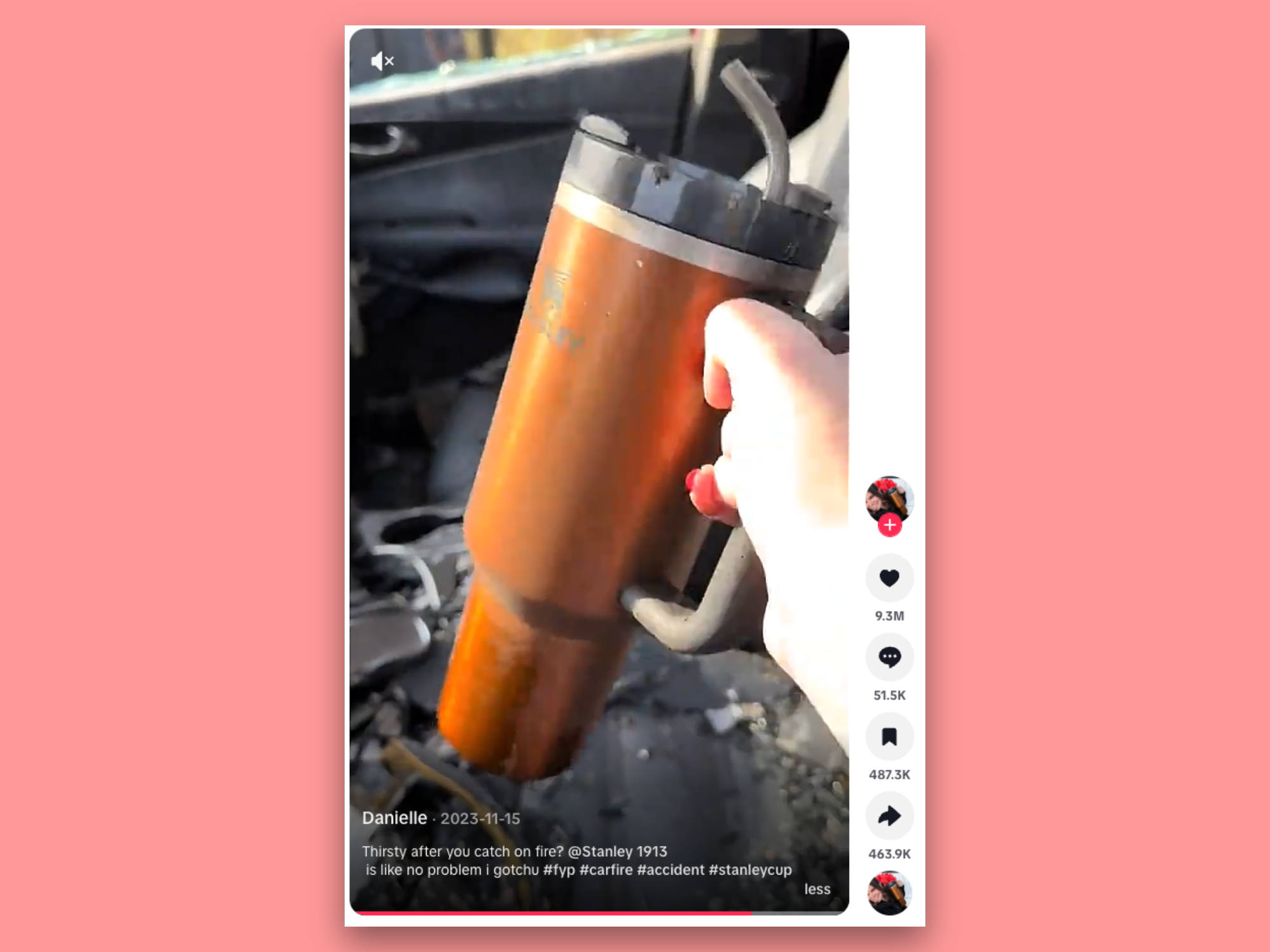
She tagged Stanley in the caption – she wasn’t asked to or paid to.
The video racked up tens of millions of views and, within days, the brand's president had stitched her video, offering to send her new tumblers and replace her car.
One word of warning, though: a creator loving your brand doesn't mean their audience will. Your biggest fan might have a following that's 80% teenagers in a country you don't ship to. So they still need vetting like everyone else. Sorry.
Also, doing all this by hand is fine when you've got 2,000 followers. At 50,000? Absolutely not. Life's too short.
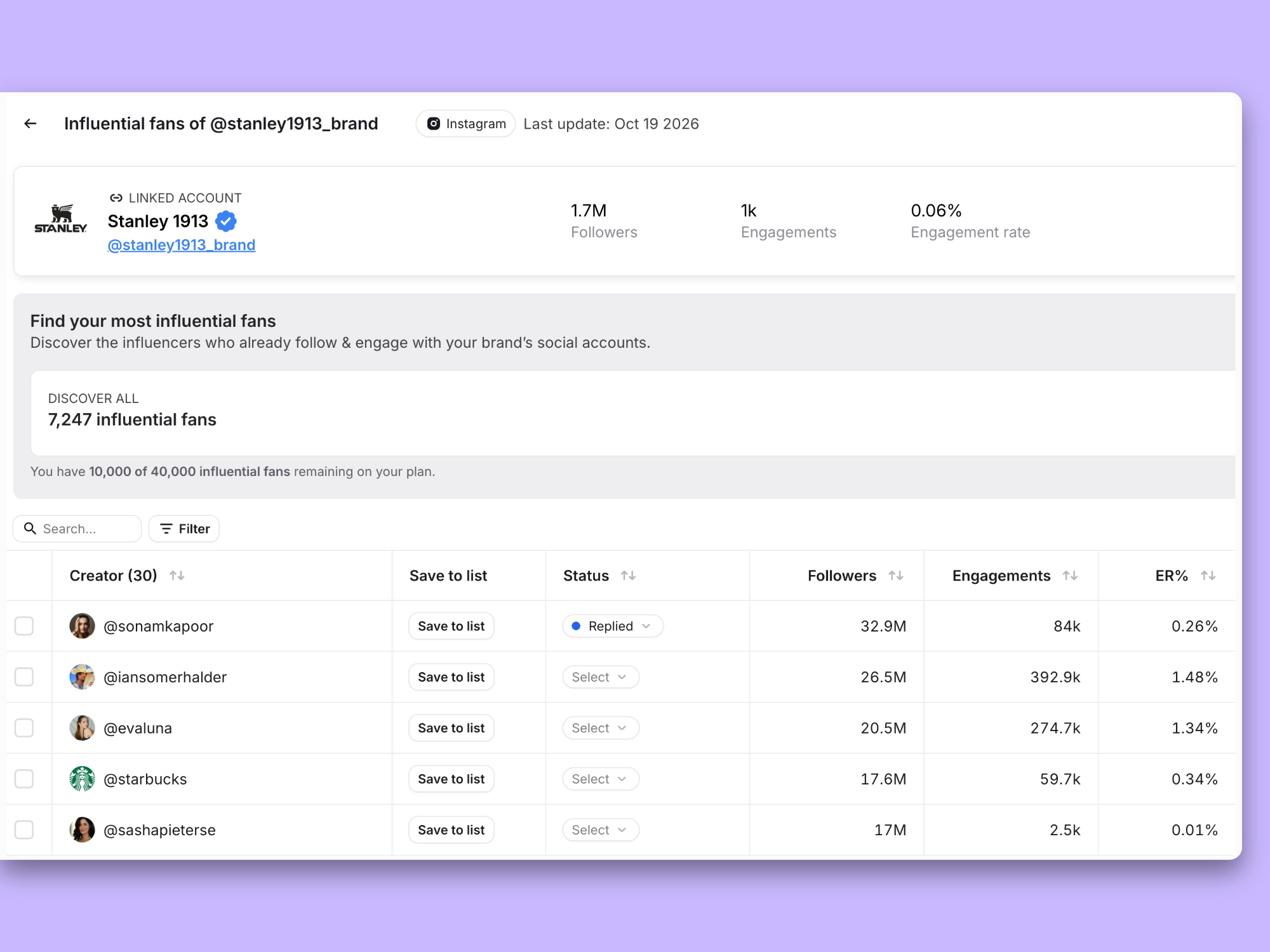
That's where Modash's find your fans feature comes in. It pulls up the creators who already follow and engage with your brand, so you don't have to endlessly scroll for them. You can even import your customer emails to find creators hiding in your order history.
Best for you if: you're moving into a category with some big established players and want proof of what works before you spend a single cent.
Is it a bit cheeky to snoop on your competitors' influencer programs? Maybe. Does everyone do it anyway? Absolutely.
And honestly, it makes sense. If a creator's audience has already bought from a brand like yours, there's a decent chance they'd buy from you too. Your competitor has basically done the testing for you (very kind of them).
To do your snooping manually:
Before you slide into anyone's inbox, though, there are two things that might trip you up:
Tip: How much saturation matters depends on your category, though. A skincare creator can happily rave about two different moisturisers, but a health creator pushing two rival omega-3 supplements just looks odd. So make sure your partnership makes sense next to what they’ve already promoted.
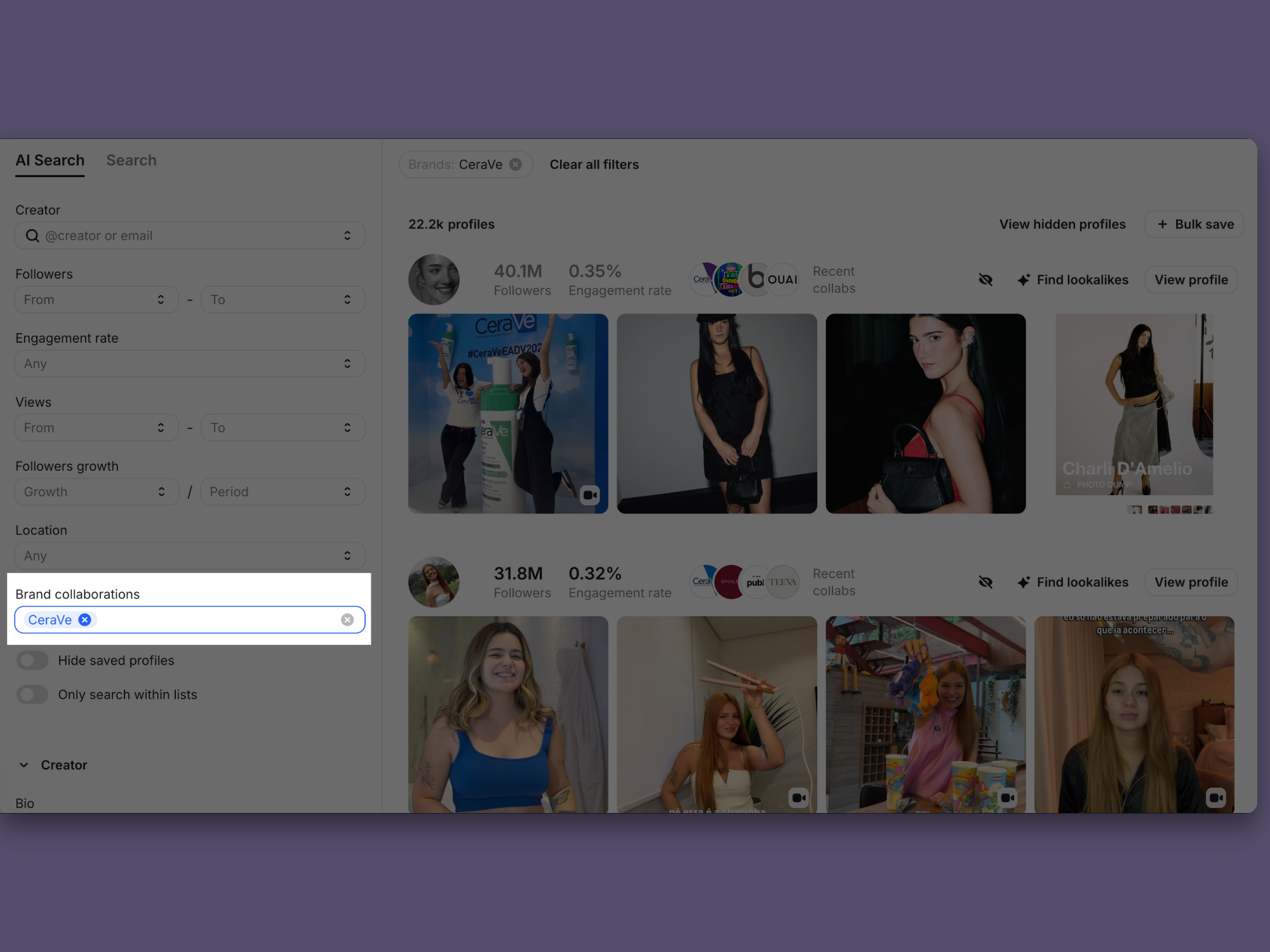
This manual route works, but it's slow, and you only see the collabs you happen to stumble across. With Modash, you can search for creators who've worked with specific brands – it’s a handy filter you can use to layer on along with your other requirements.
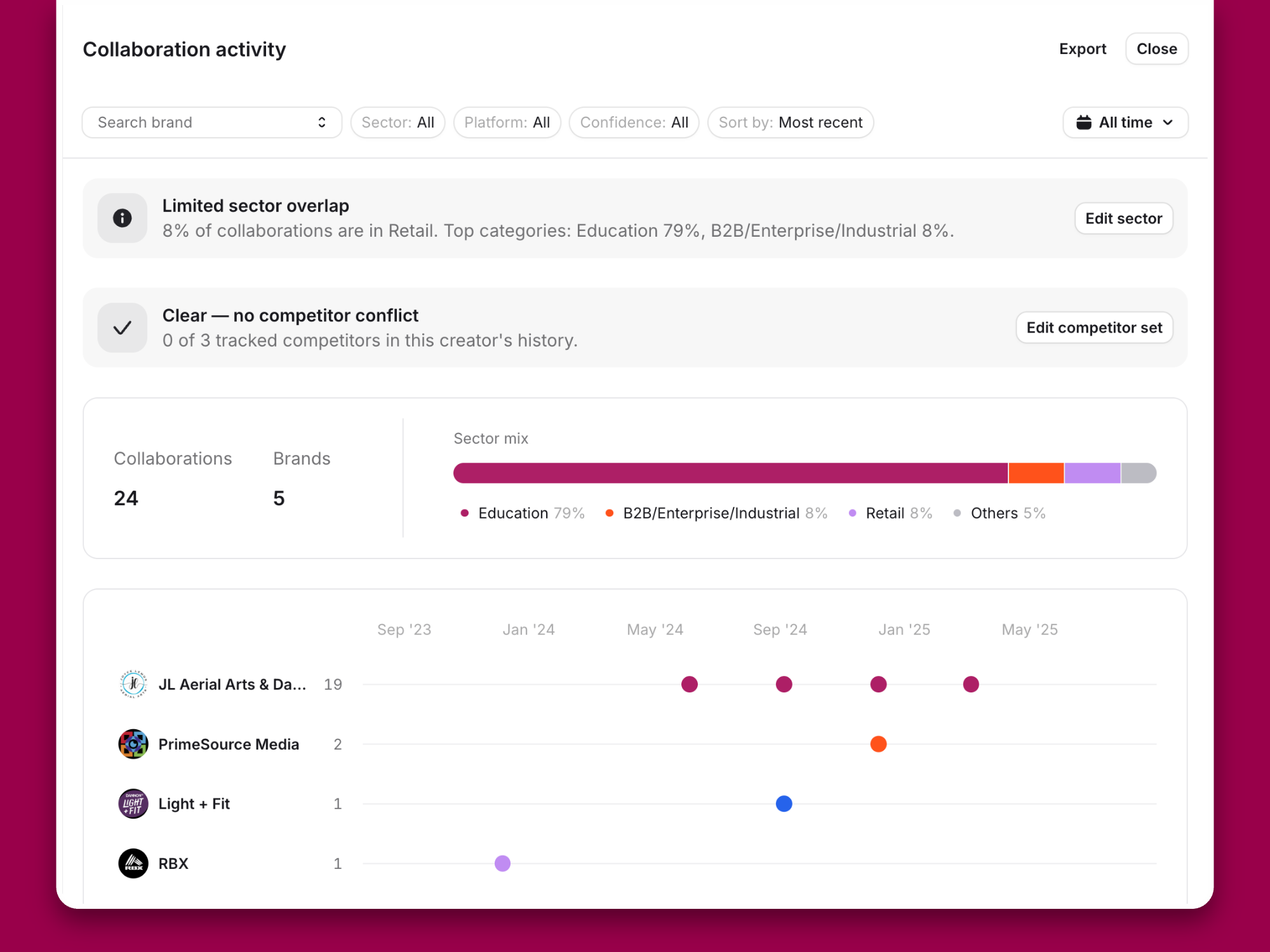
You can also see every creator’s collaboration timeline to see what they posted, how it performed, and how often they partnered with each brand. If they post about your competitor every other month, for example, their audience might already be bought into the rival brand – your brand will need to do a lot of work to stand out.
🤓 We go deeper on all this in our guide to influencer competitor partnerships.
Best for you if: you've got more budget than time, or you want to test the channel before building an in-house team.
Sometimes the smartest way to find influencers is to… not. Let someone else do it.
There's zero shame in that. Outsourcing the search makes a lot of sense if:
An agency or marketplace turns up with a ready-made roster and people whose entire job is finding creators.
But (you knew there was a "but" coming) you're trading two things: money and control.
Agencies aren’t cheap and you’ll have less say over who makes the cut. They also won’t know your brand and goals as well as you do, so you might end up doing some of the vetting yourself anyway. And the big one: the agency usually owns the creator relationship, not you. If you part ways, those relationships tend to leave with them.
If influencer marketing is a side quest for your brand, that's probably fine. If it's a core part of your marketing for years to come, that last one's gonna sting.
Ever get the feeling you're fighting over the same 40 creators as every other brand in your category?
You probably are.
It happens when your wishlist gets a bit… much. Must be in our exact niche. Must have the perfect aesthetic. Must already talk about products like ours. Must be a Sagittarius. Before long there's only a handful of people who qualify, and all your competitors are in their inbox too.
We call this overfitting, and it's a pain for a couple of reasons:
The fix is storyfit creators. These are people who can tell your brand's story in a way that feels authentic to them, even if they don’t match your niche on paper.
There are three ways to find them:
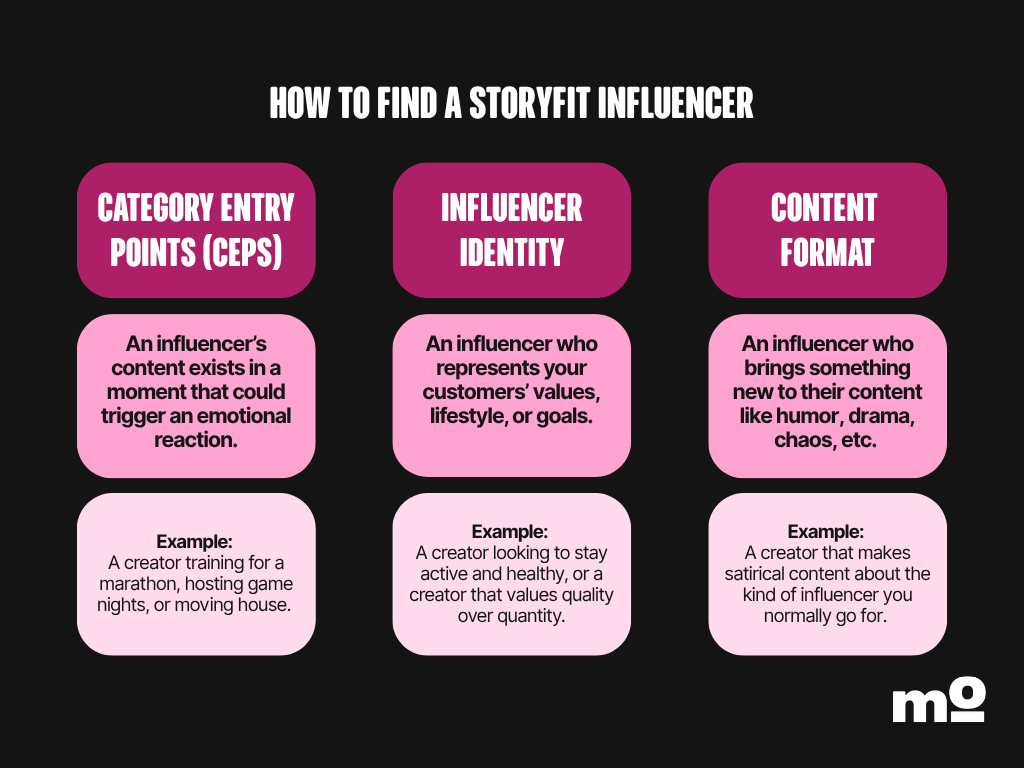
Want to see it in action? Take Metabolic Meals, a healthy, nutrition-rich food delivery service for people who want to achieve their fitness goals. They work with health creators, as you'd expect. But they also team up with mom influencers to show a different value of their product: feeding your family when you’re too busy to cook healthy meals every day.
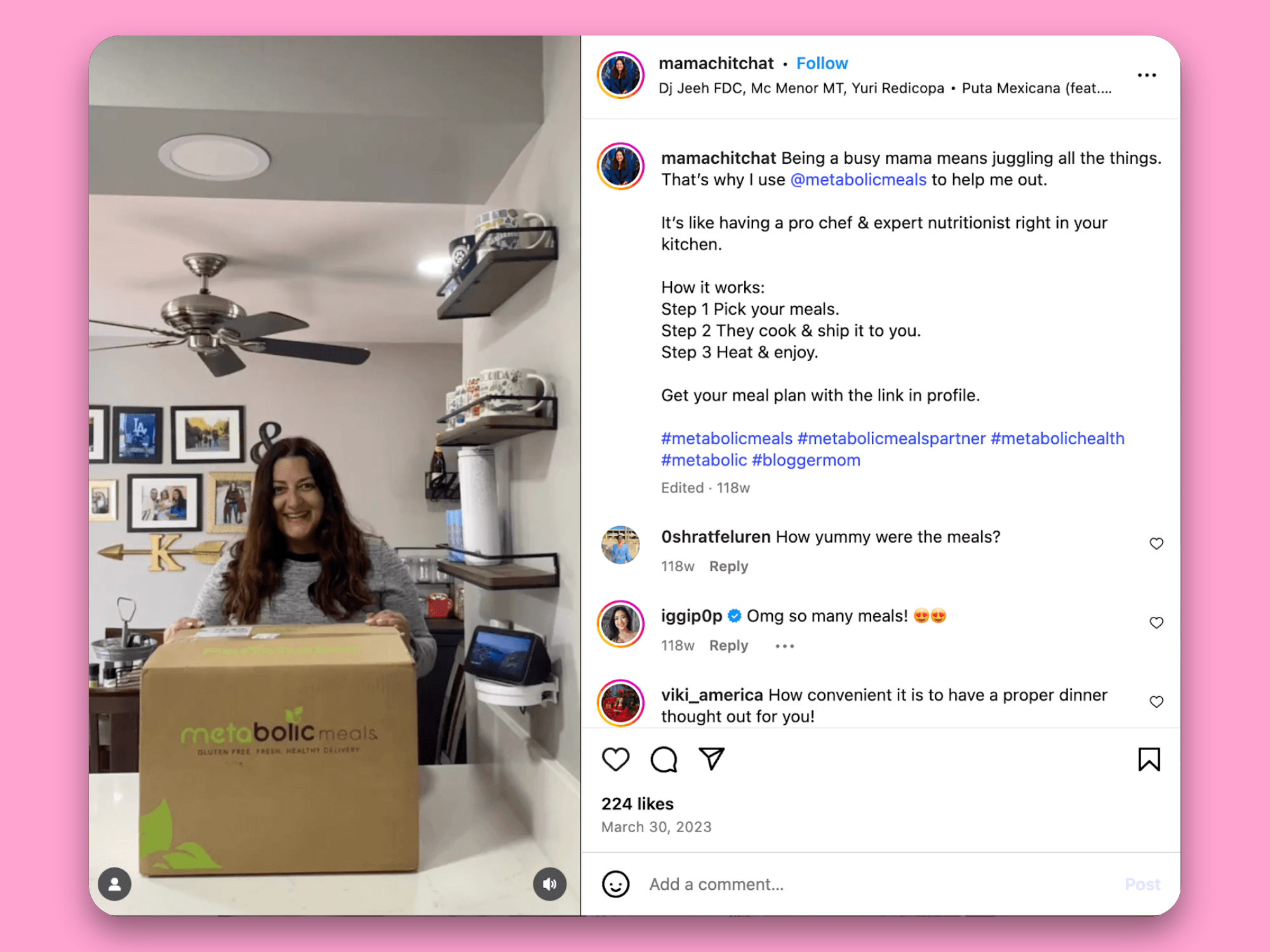
The best part is that hardly anyone's doing this. Only 35.7% of marketers in our survey regularly test new kinds of creators, so there's a whole lot of open space while everyone else squabbles over the usual suspects.
One handy rule to steal from the framework: stop looking for creators who tick 100% of your boxes. Aim for 75% instead.
👉 Learn more about how to find storyfit influencers.
Once you've got a nice long list of creators, it’s time for the less fun part: working out which of them are actually any good.
It’s really tempting to rush or skip this step because it eats time. Most marketers in our survey spend 5–15 minutes checking out a single profile. Got 100 creators on your list? That's your whole week gone 🫠
But it's also what stops you spending budget on someone with a big following and an audience full of bots. So it is worth doing properly.
The storyfit framework has a line I love: "Don't confuse reach with resonance." A creator can have huge numbers and still move absolutely nobody.
To avoid getting burned, ask three questions about every creator:
Think of it like a tripod. Take away one leg and the whole thing falls over.
Question three is easy enough. You just need eyes and a bit of gut feeling. Questions one and two are the tricky ones, because you can't see a creator's audience data from the outside… which means emailing them to ask for it.
Modash takes care of that bit for you. Every profile shows audience demographics, fake follower rate, engagement, and past brand collabs, all before you've sent a single email.
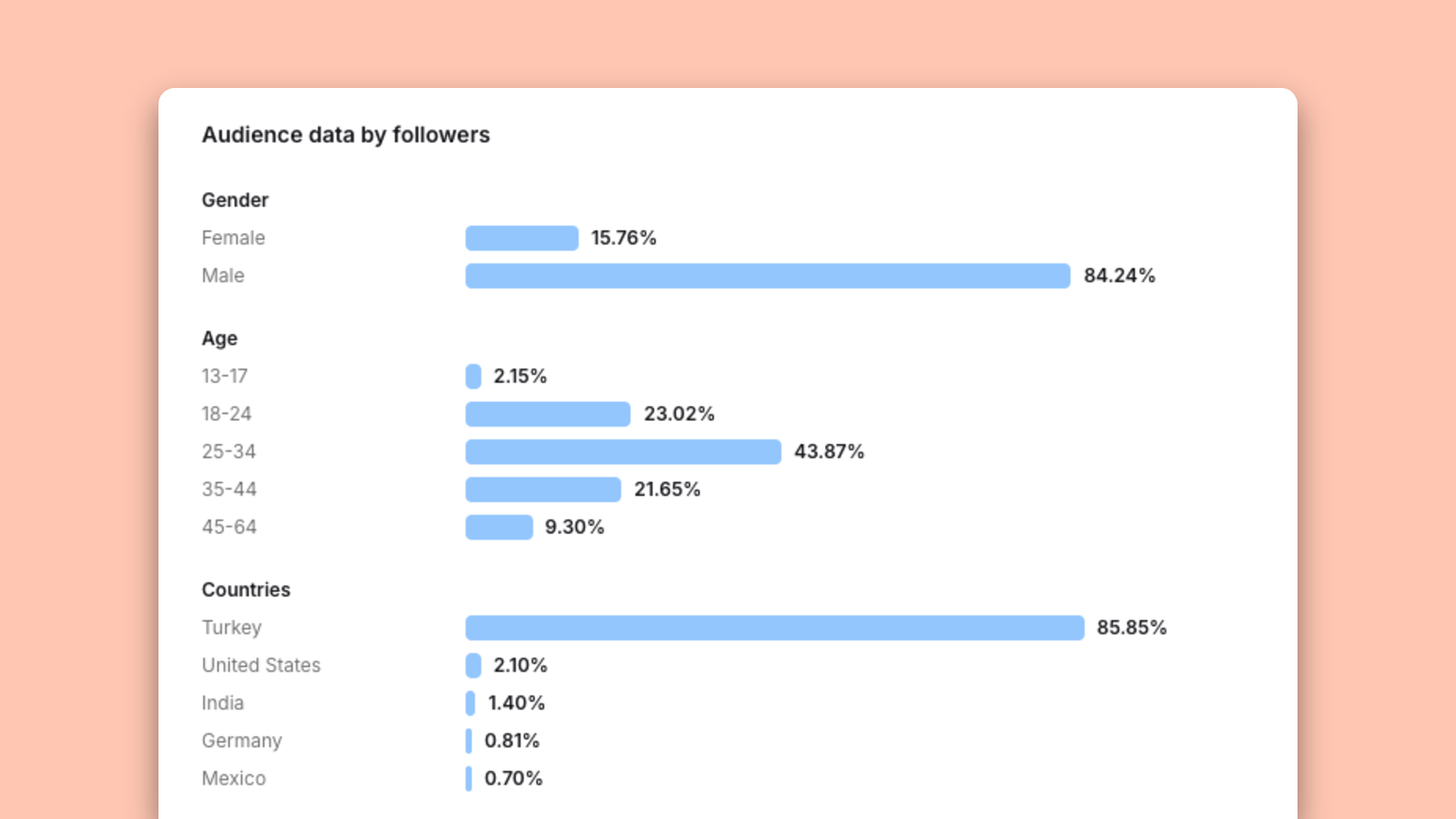
So you get to spend your time on the part that actually needs a human: the gut check.
Founder and influencer marketing specialist Victor Wiśniowski puts it well:
You save time (and ultimately money) by using software because shortlisting influencers and asking each one of them for metrics takes so long. And once they reply with their metrics, you might realize they aren’t a fit.
🤓 Want the full process? Have a read of how to choose the right influencers and our list of influencer red flags.
I'm not going to sugarcoat it. Finding right-fit influencers is getting harder, and it gets harder still when you need 50 of them rather than five.
But it's a whole lot less painful once you stop treating it as one giant scroll-a-thon and split it into two steps:
Do both and you'll never have to pick a creator on vibes again.
Of course, a lovely shortlist is just the start. You've still got to email them all, keep track of who said what, see whether their content does anything, and pay them on time.
With Modash, you can do all of this from the same dashboard, including finding your creators, then handling outreach, managing your relationships, tracking performance, and paying everyone.
👉 Give a go for yourself. Try Modash free for 14 days.
Honestly, there isn't just one. An influencer database with filters is the quickest way to build a vetted shortlist, while lookalikes and your existing fans tend to turn up the best-fitting creators. Most marketers mix a few methods, then vet whoever they find.
Yep! Instagram, TikTok, and YouTube search are all free, as are Google and ChatGPT. If you want audience data too, Modash has a 14-day free trial and also a free influencer search tool to help you get started.
Search hashtags and keywords on social, browse Explore and the For You page, check who's already tagging you, and see who your competitors work with. It won't cost you a penny, but it will cost you time, and you won't be able to see anyone's audience data.
Look past follower count and check three things: reach (are people actually engaging?), relevance (is it the right audience?), and resonance (do people trust them?). A smaller creator who nails all three will beat a huge one who doesn't. Our guide to influencer brand fit has more.
Search for niche and credential keywords in bios and hashtags, like "dermatologist" or "trail running." Or use the bio keyword and topic filters in an influencer database to do it in seconds. For smaller creators in particular, see our guide to finding micro-influencers.
A creator who can tell your brand's story in a way that feels authentic to them and resonates with their audience, even if they're not in your niche. Think a marathon runner promoting protein bars rather than someone who reviews protein bars. You find them by looking at moments, identity, and content style instead of product category.
Our expert contributors